Highland cattle colours explained
Red, black, yellow, dun, white, silver and brindle — what each word means, the two genes behind nearly all of it, why a calf's coat is not its adult coat, and where the HighPark pattern fits.
Colour is the first thing anyone asks about Highlands and the last thing that should decide a purchase. It is also more orderly than it looks. Nearly every Highland coat in Australia comes out of two genes doing simple things, and once you can see those two switches the whole range stops being a list to memorise and starts making sense.
The colours you will actually see
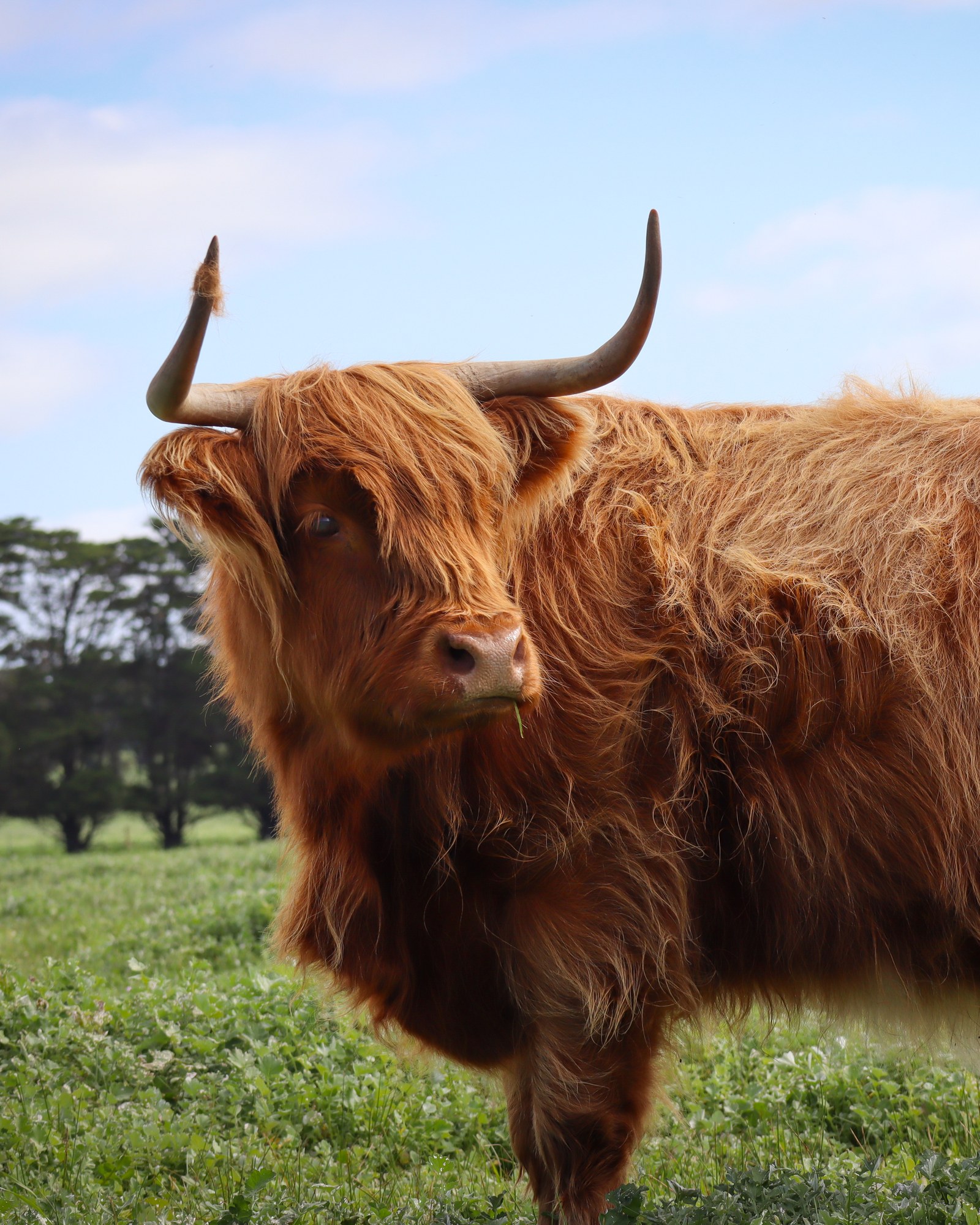
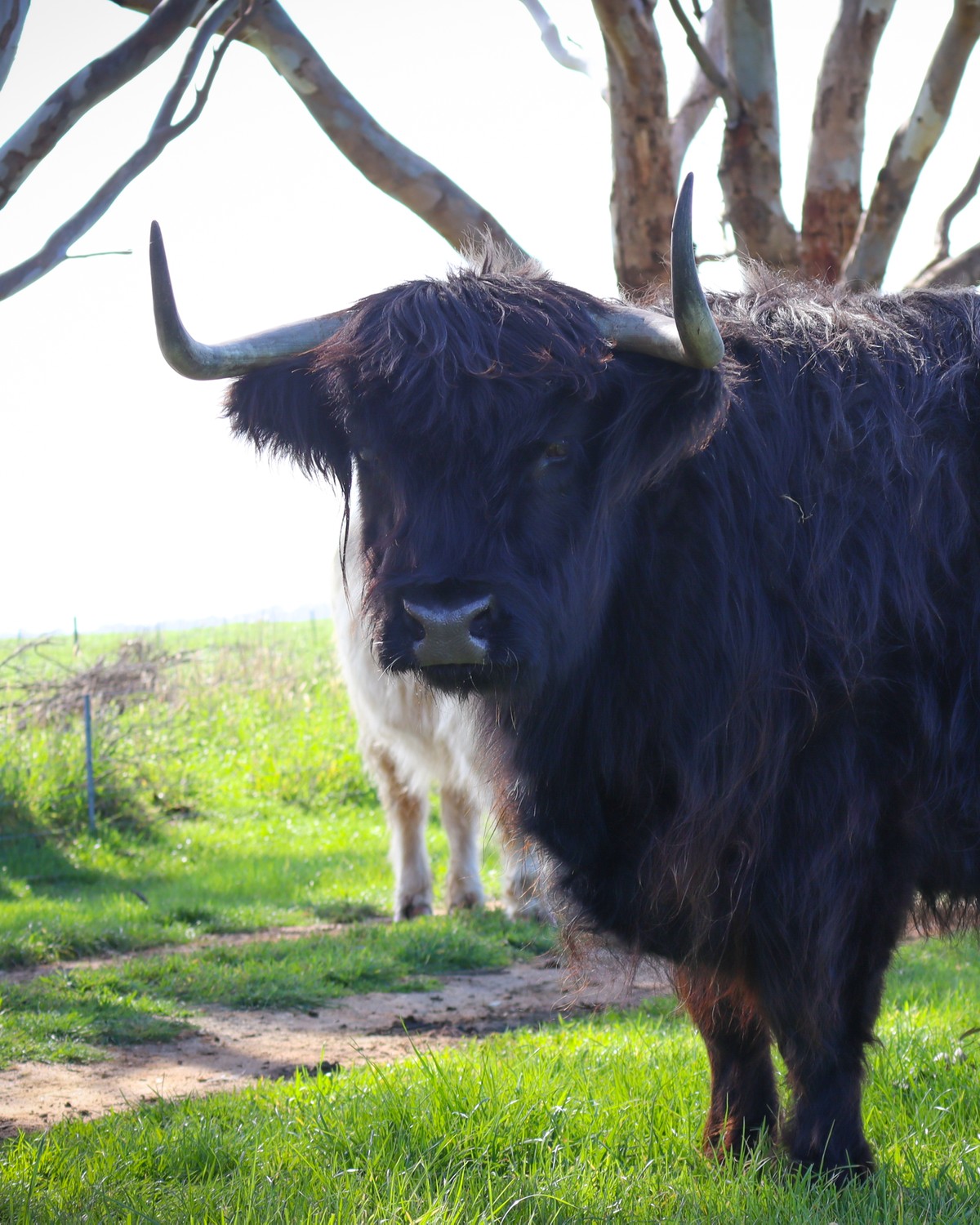
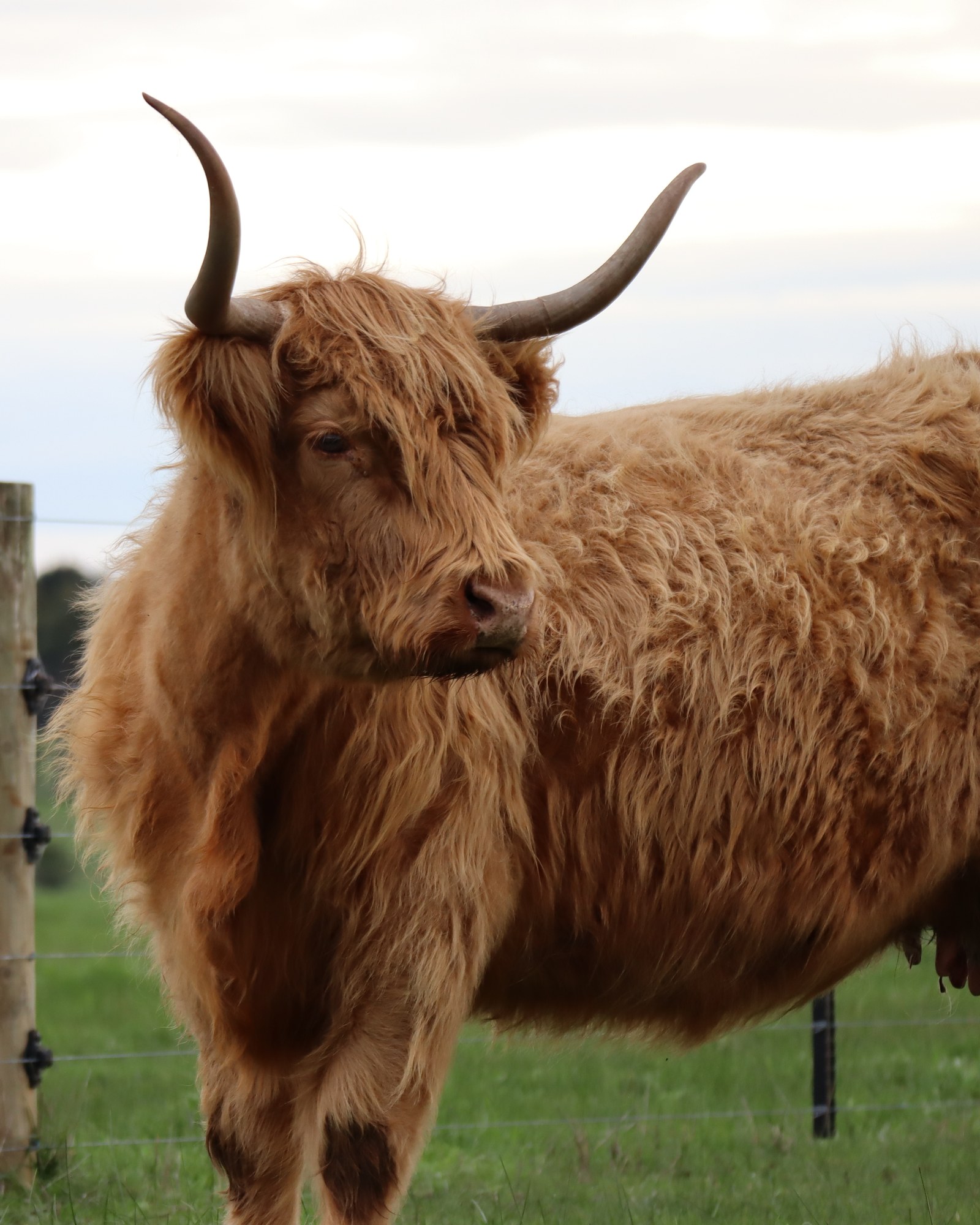
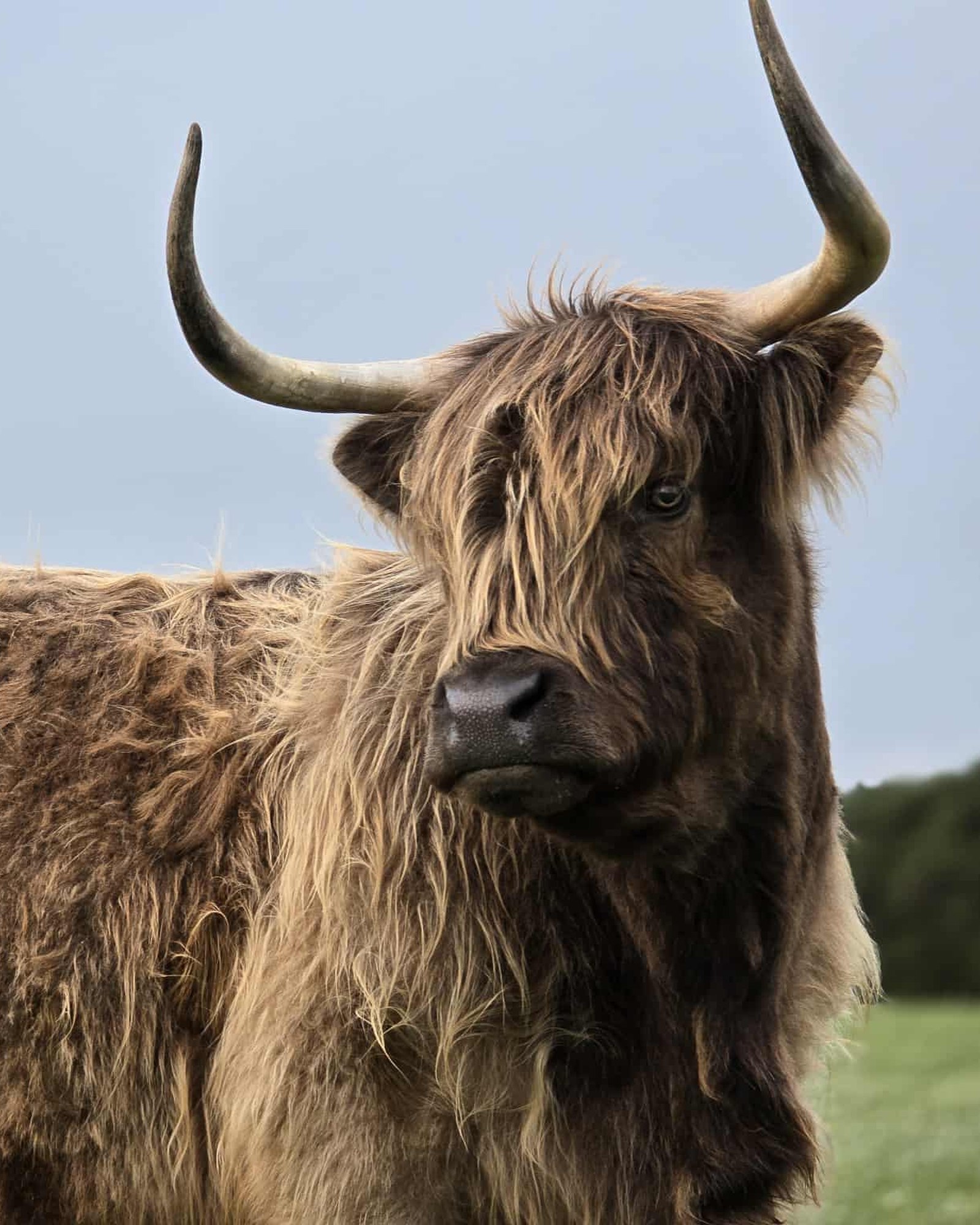
Every animal below is one of ours, photographed here at Freshwater Creek.
Red is the classic, and still the colour most people picture. It covers a wide band, from a pale ginger through to something close to liver, and a calf is frequently born a good deal darker than it finishes.
Black is dramatic and holds its colour well, though a black coat in full summer sun will often bleach at the tips to a rusty brown.
Yellow is a soft golden fawn. It photographs badly in flat midday light and beautifully in low sun, which is why so many good yellow Highland photographs are taken in the last hour before dark.
Dun is a smoky grey-brown, and currently the colour people ask us for most.
White is uncommon, striking, and shows every bit of mud within about four minutes of rain.
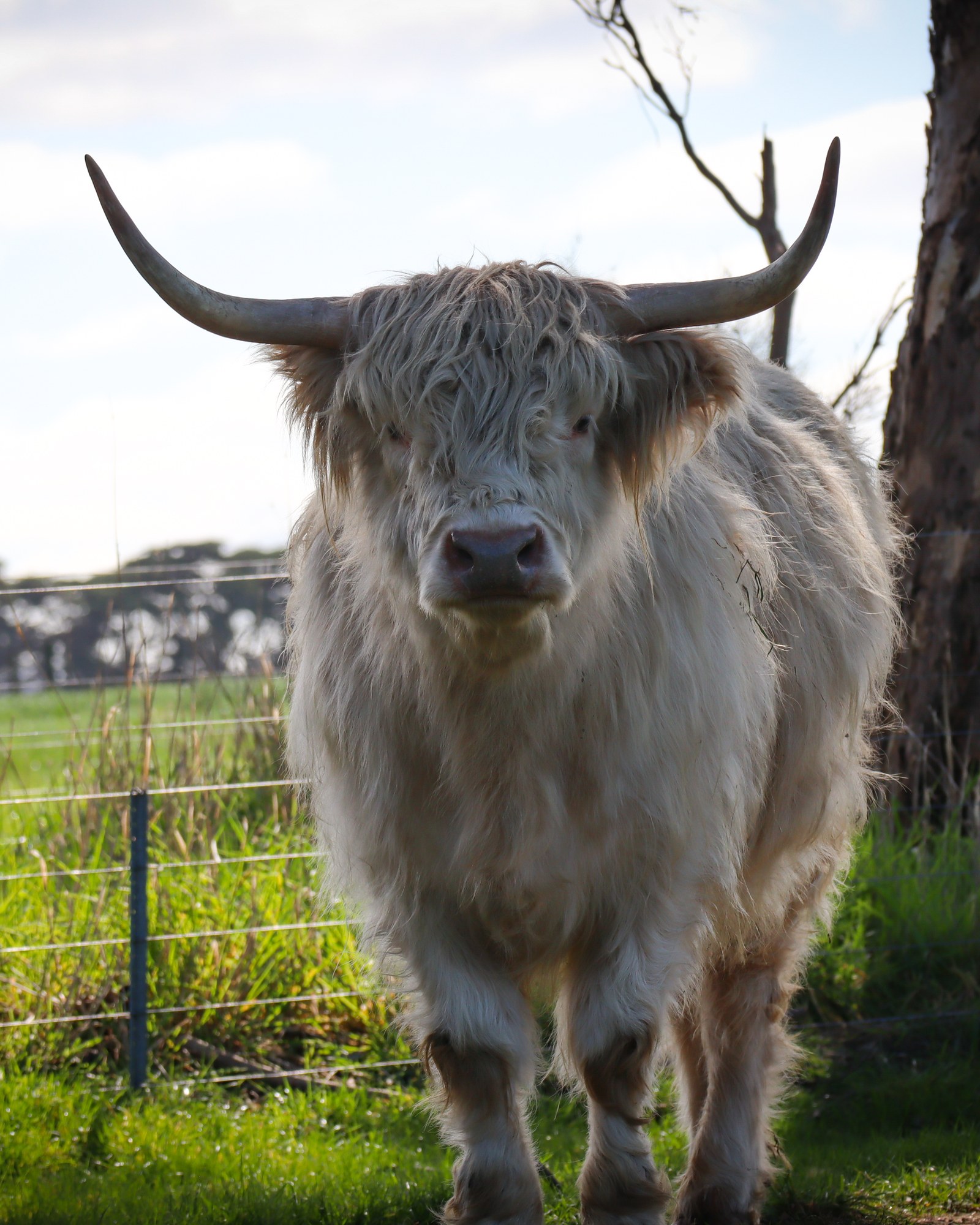
Silver, properly silver dun, is a pale dun heading toward white. It is the colour that changes most between calf and adult.
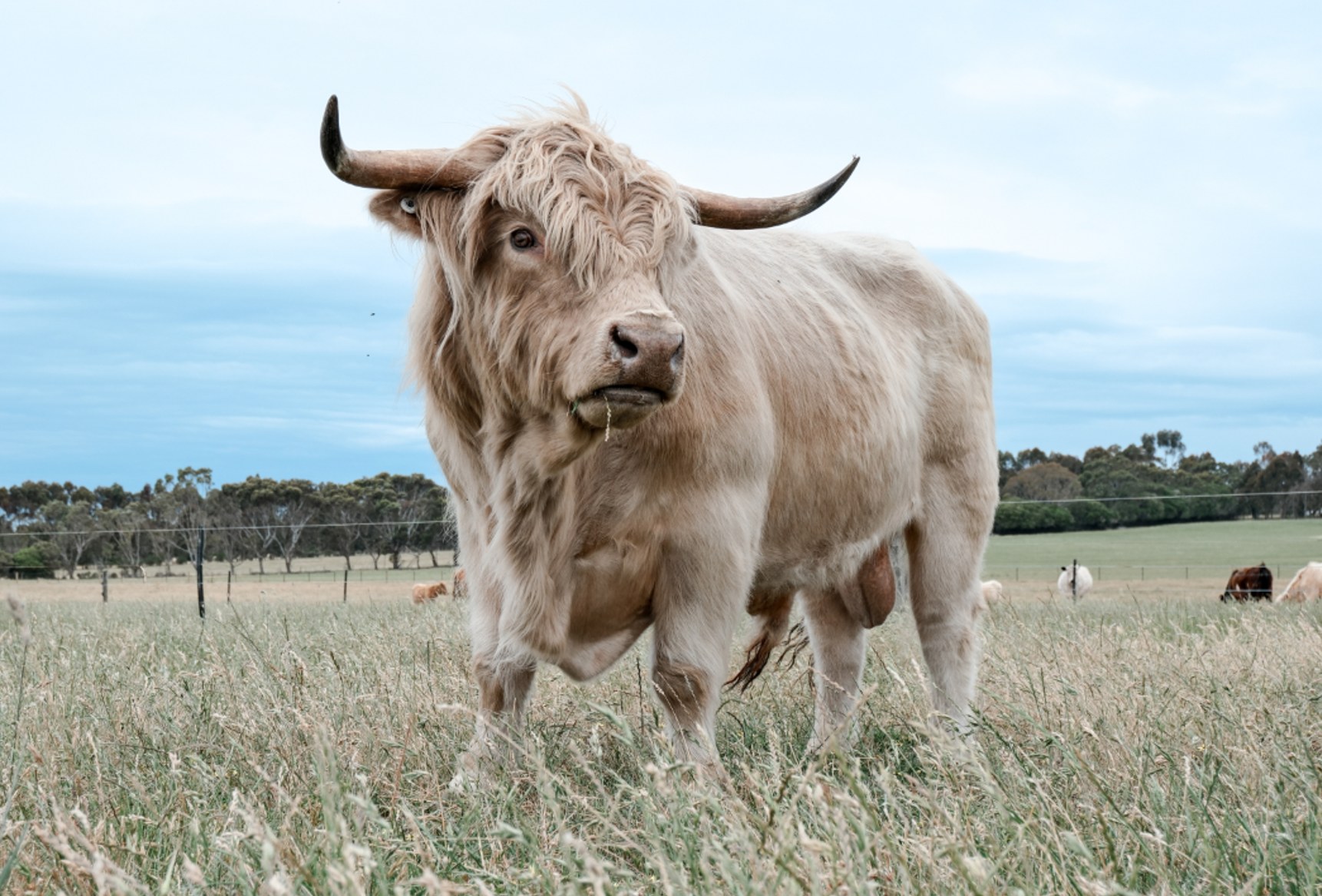
Brindle is striped rather than solid — darker striping running through a lighter base. It is uncommon, and people tend to either love it or not notice it at all. We have no brindles in the fold at the moment, which is why there is no photograph of one here.
The two genes behind almost all of it
This is the working model breeders use, and it explains the great majority of what turns up in a paddock.
The first switch decides red or black. It sits at the extension locus, and there are three versions of it. ED gives black and is dominant, so one copy is enough. The lowercase e gives red and is recessive, so a red animal carries two copies of it and can only ever pass red on. Between them sits E+, the original wild-type version, which produces a red-brown and is the one that matters for brindle.
Because black is dominant and red is recessive, a black animal may be carrying red without showing it. Two black parents can produce a red calf. Two red parents cannot produce black — red to red breeds red, every time.
The second switch dilutes whatever the first one decided. One copy of the dilution allele takes red to yellow, and black to dun. Two copies take it further: red becomes white, and black becomes silver dun.
So the range is not seven unrelated colours. It is two base colours, each at three strengths:
- Red → red (no dilution) → yellow (one copy) → white (two copies)
- Black → black (no dilution) → dun (one copy) → silver dun (two copies)
Brindle sits somewhere else entirely. It comes from a separate allele at the agouti locus, and it only shows on animals carrying that wild-type E+ version of the first gene. That is why brindle turns up unpredictably: an animal can carry the brindle allele and never show a stripe, because the base colour it landed on does not let the pattern express.
White is a colour, not a pattern
Worth being precise about this one, because it causes real confusion when people start looking at crosses.
A white Highland is white all over. It is a double-diluted red, arrived at through the second switch above, and the whole animal is affected.
A white body with coloured ears, muzzle, eye rims and feet is something completely different. That is a spotting pattern, not a dilution, and in Australia it comes in through White Galloway, British White or a white-park-patterned Speckle Park. It is where the HighPark look comes from — ours are Highland over Galloway. A HighPark is not a white Highland, and a white Highland is not a HighPark, even though a photograph at a distance can make them look related.
How to read a calf's coat
A calf's colour is not its adult colour, and this is the single most common way people end up disappointed.
Calves are born in a soft woolly coat that has very little to do with what they will carry as adults, and the colour underneath often shifts several times before it settles — sometimes not fully until the second year. Duns and silvers move the most. Reds commonly lighten. Blacks can go through a brown phase and come back.
Three things help:
- Look at both parents, and at any full or half siblings. Family is a far better predictor than the calf in front of you.
- Check the coat at the poll and along the topline rather than the sun-bleached flanks, and look at the animal in low light rather than at noon.
- Ask what the breeder expects, and why. Anyone breeding seriously will tell you plainly that a young calf's colour is not a guarantee.
The short version: buy the animal, not the photograph of a six-month-old.
What the societies actually register
In Australia the recognised colours are red, black, yellow, dun, white and brindle. Silver dun and mahogany exist perfectly well in the paddock but do not have separate registration status here, so a silver is typically recorded as dun.
Two things follow from that. Registration papers record a colour as assessed at the time, which for a calf may not be the colour the animal ends up carrying. And colour terminology is not standardised between registries in different countries, so a term you have read on an overseas breeder's website may not mean the same thing on an Australian pedigree. If colour matters to you, ask what is on the papers and ask what the animal looks like now.
Does colour change the price?
Yes, and it has very little to do with the quality of the animal.
Fashionable colours carry a premium, and which colour is fashionable moves around. Dun and silver command more attention at the moment than they did a few years ago. That is fine — people are allowed to want a particular colour, and most of us bought our first Highland partly because of how it looked.
Just know which thing you are paying for. Colour is fashion. Temperament, structure, feet and a quiet nature are function, and they are what you live with every day for fifteen or twenty years. If you find yourself choosing a nervy animal in the right colour over a lovely one in the wrong colour, that is the moment to stop and reconsider.